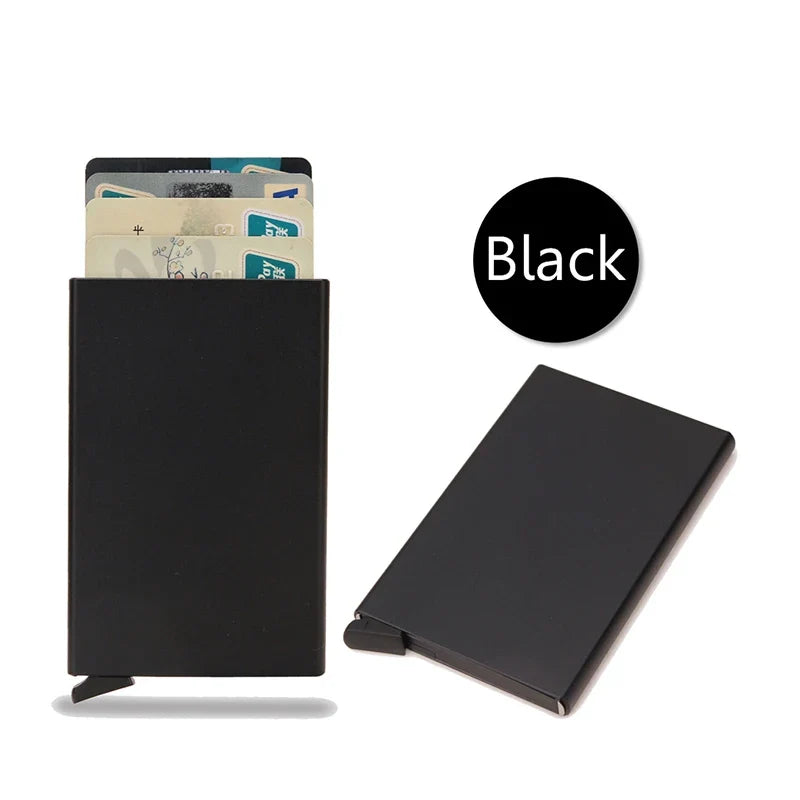
A slim cardholder saves space in your pocket, provided its contents suit your everyday needs. The most important question to ask first is therefore: Which cards do you really need to carry with you at all times? Only then is it worth comparing the design, mechanism, and external dimensions.
Select your everyday essentials
Lay your cards out on a table and sort them by how often you use them. What do you need every day, what only occasionally, and what can stay at home? Plan a dedicated space for your ID, payment card, and access card. Coins, receipts, and keys should only go in the cardholder if there are actually suitable compartments for them.
Also consider how you pay and identify yourself. A rigid cardholder is not simply a smaller version of every wallet. If you regularly need cash or paper receipts, you may need to plan for an additional solution.
Consider the number and thickness of cards together
Capacity specifications refer to a particular arrangement and may depend on the thickness of the cards. Embossed cards, protective sleeves, or unusual shapes take up more space than thin, smooth cards. The number on the product page is therefore a guide, not an invitation to fill the cardholder until you meet mechanical resistance.
Choose the access method that suits you
With an ejector mechanism, the inserted cards are pushed up in a staggered fashion using a lever. This may suit your needs if you want to select cards from the top. The key is whether you can easily reach the lever and remove the desired card without having to awkwardly reposition your hand.
Test a permissible load carefully and without force. If a card is stuck, pressing harder is not a reliable solution. Follow the instructions of the respective manufacturer and do not use unsuitable inserts simply to achieve a higher capacity.
Evaluate material and protection claims separately
A metal casing first describes the material. It does not automatically confirm a tested protective function for every radio technology or every card. If a supplier advertises RFID shielding, ask for independent proof. Without it, you are better off choosing the cardholder based on proven construction, size, and mechanism.
Checklist before purchase
- Have you counted the cards you need every day?
- Have you considered card thickness and possible sleeves?
- Have you separately addressed storage for cash and receipts?
- Have you compared the external dimensions with your own pocket?
- Is access via the ejector lever suitable for your needs?